
Historic Markers Revisited
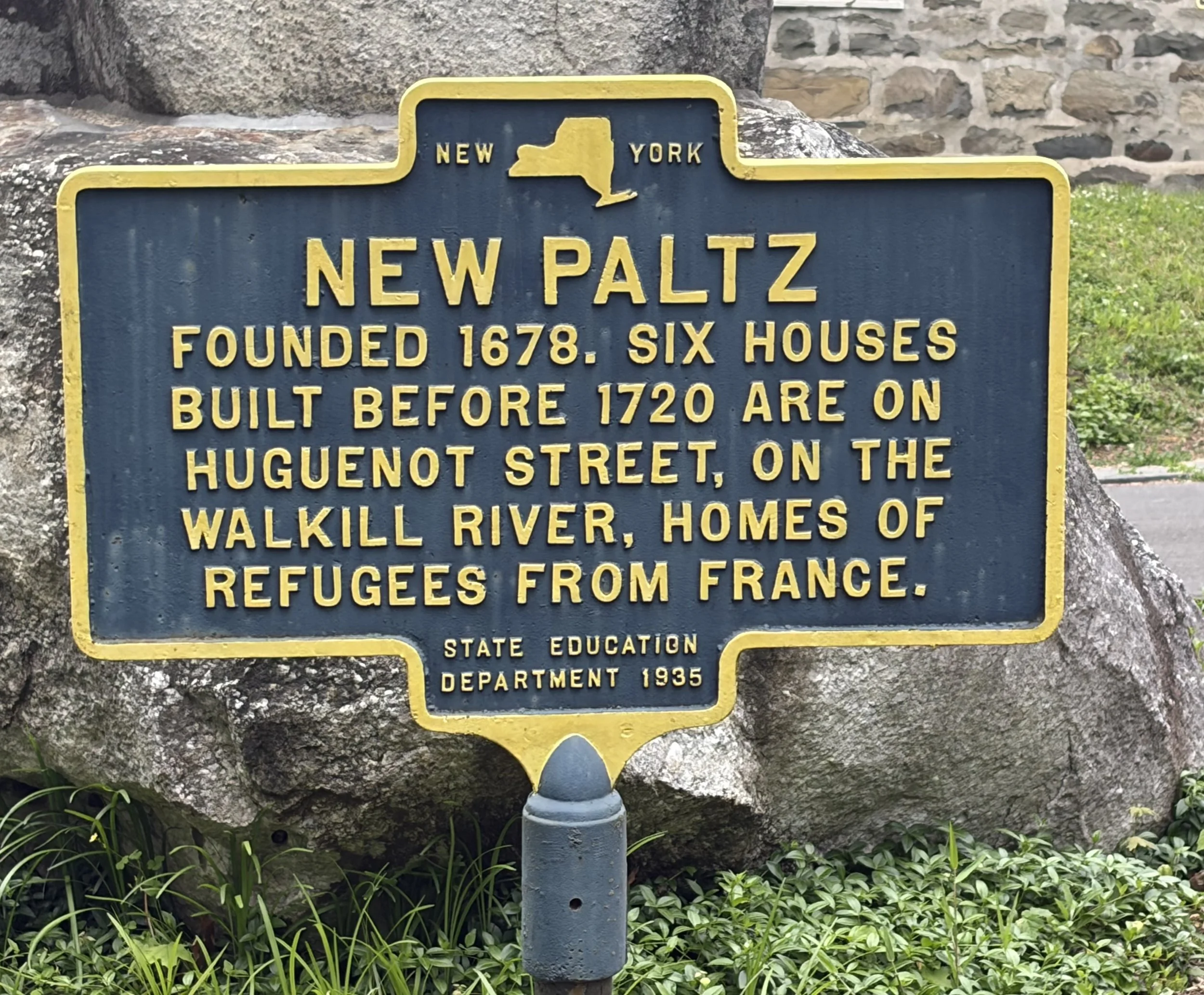
New Paltz
at foot of Monument
FOUNDED 1678. SIX HOUSES BUILT BEFORE 1720 ARE ON HUGUENOT STREET, ON THE WALLKILL RIVER, HOMES OF REFUGEES FROM FRANCE.
-
On May 26, 1677, the twelve patentees presented a written land agreement to the Esopus, the local Indigenous people, in which they offered European goods in exchange for permission to reside on nearly 40,000 acres.
In September of the same year, the agreement was officially approved in a royal patent signed by Sir Edmund Andros, Governor of the Province of New York. This tract of land became known as the New Paltz Patent.
-
At least two of the stone houses have origins before 1720 (the DuBois House in 1705 and the Deyo House in the early eighteenth century), but they were later greatly expanded and remodeled.
-
In the 1640s and 1650s, the families first went to the German region called die Pfalz [link to die Pfalz page], from which New Paltz gets its name. In the 1660s and early 1670s, they immigrated to North America, where they later established their own community in 1677 and called it “The Paltz” (later New Paltz).
The first European settlers of New Paltz are understood to have been a combination of Huguenots (French-speaking Protestants from France) and Walloons (French-speaking Protestants from present-day Belgium).
-
These lands have been home to Esopus people for thousands of years and are still culturally significant to native nations today. Archaeological excavations on the site have unearthed tens of thousands of artifacts from Indigenous habitation dating as far back as 8000 BCE.
The Esopus are considered a subgroup of the Lenni Lenape and their language is a dialect influenced by the Munsee and Unami-speaking Lenape neighbors to the south and their Mohican neighbors to the north. The Esopus shared similar lifeways with these other groups and regularly interacted with them through trade and kinship ties.
In the 1677 land agreement, the Esopus reserved the right to hunt and fish on the land. Despite the major disruption to their society that European colonization caused (especially the dispossession of their lands), some Esopus people continued to reside in New Paltz as late as the 1820s, trading carved wooden bowls and spoons and baskets that they made from local trees.
Eventually driven to establish communities in Ontario, Oklahoma, and Wisconsin, the Esopus people continue to visit their ancestral homelands today.
The Wallkill River was a valuable resource for both the native Esopus population living along its banks and the later European colonizers, providing a transportation route, source of food, and irrigation for crops.