
Historic Markers Revisited
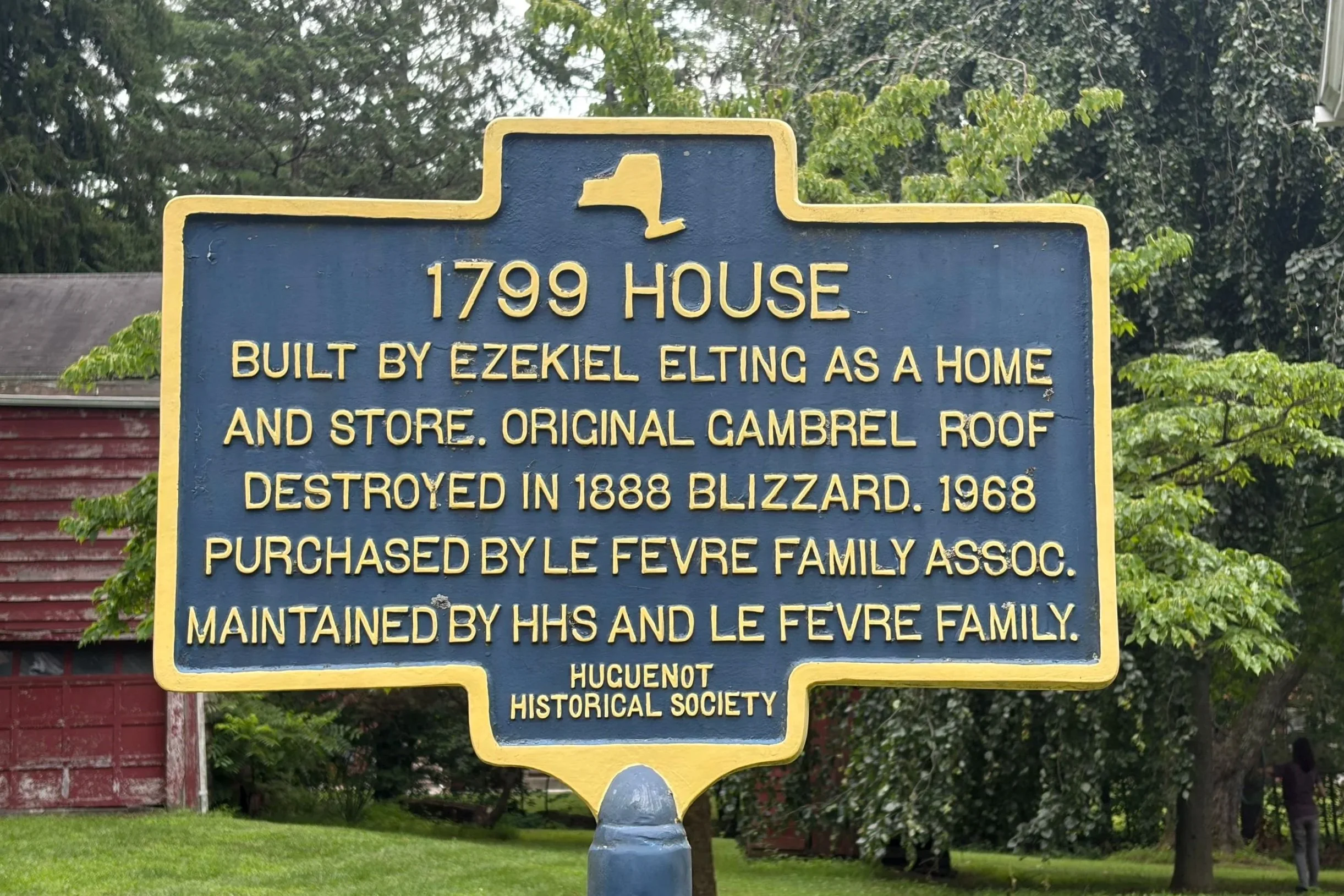
1799 HOUSE
Ezekiel Elting House
BUILT BY EZEKIEL ELTING AS A HOME AND STORE. ORIGINAL GAMBREL ROOF DESTROYED IN 1888 BLIZZARD. 1968 PURCHASED BY LEFEVRE FAMILY ASSOC. MAINTAINED BY HHS AND LE FEVRE FAMILY.
0% Incorrect
-
The Ezekiel Elting House rivaled the Jacob (Jean) Hasbrouck House in visual luxury, featuring the first brick façade in the village of New Paltz and a gambrel roof.
Ezekiel inherited a mercantile business from his father, Roelof Josiah, which he grew in part by positioning his business near the Wallkill River for transport of goods.
-
The gambrel roof was unique among the homes on Huguenot Street. The 1799 House’s size and modern, Federal-style architecture set it apart from the other older homes on the street.
-
-
In 1810, Ezekiel acted as a foreman for the Society of Negroes Unsettled, a coalition established by twelve New Paltz men enlisting bounty hunters to locate and capture freedom-seeking men of African descent. Slave-owning descendants of other patentees participated in the coalition.
Of the people enslaved on this property, only one name has been identified, that of Piet, who was named in the Bounty Hunters’ Agreement and who negotiated with Ezekiel for his freedom in 1818.
-
Indigenous habitation predates European contact by thousands of years. Despite systematic displacement, their physical presence and influence on daily life and culture continued here well into the nineteenth century.
Europeans who settled here were French-speaking Protestants primarily seeking economic opportunity and stability.
Enslaved people of diverse backgrounds and skillsets lived in, helped build, and were instrumental in maintaining all of the historic structures on this site.